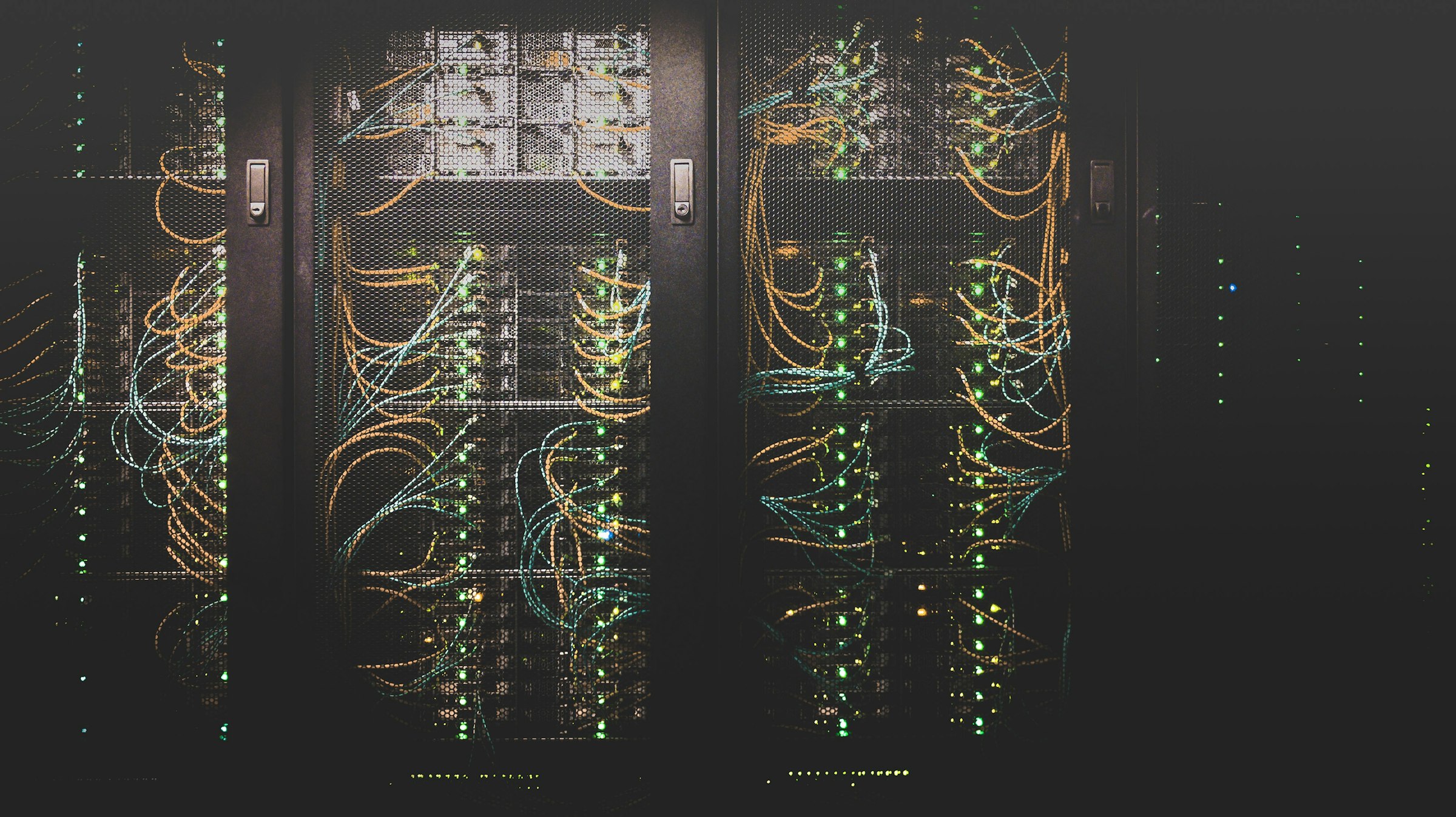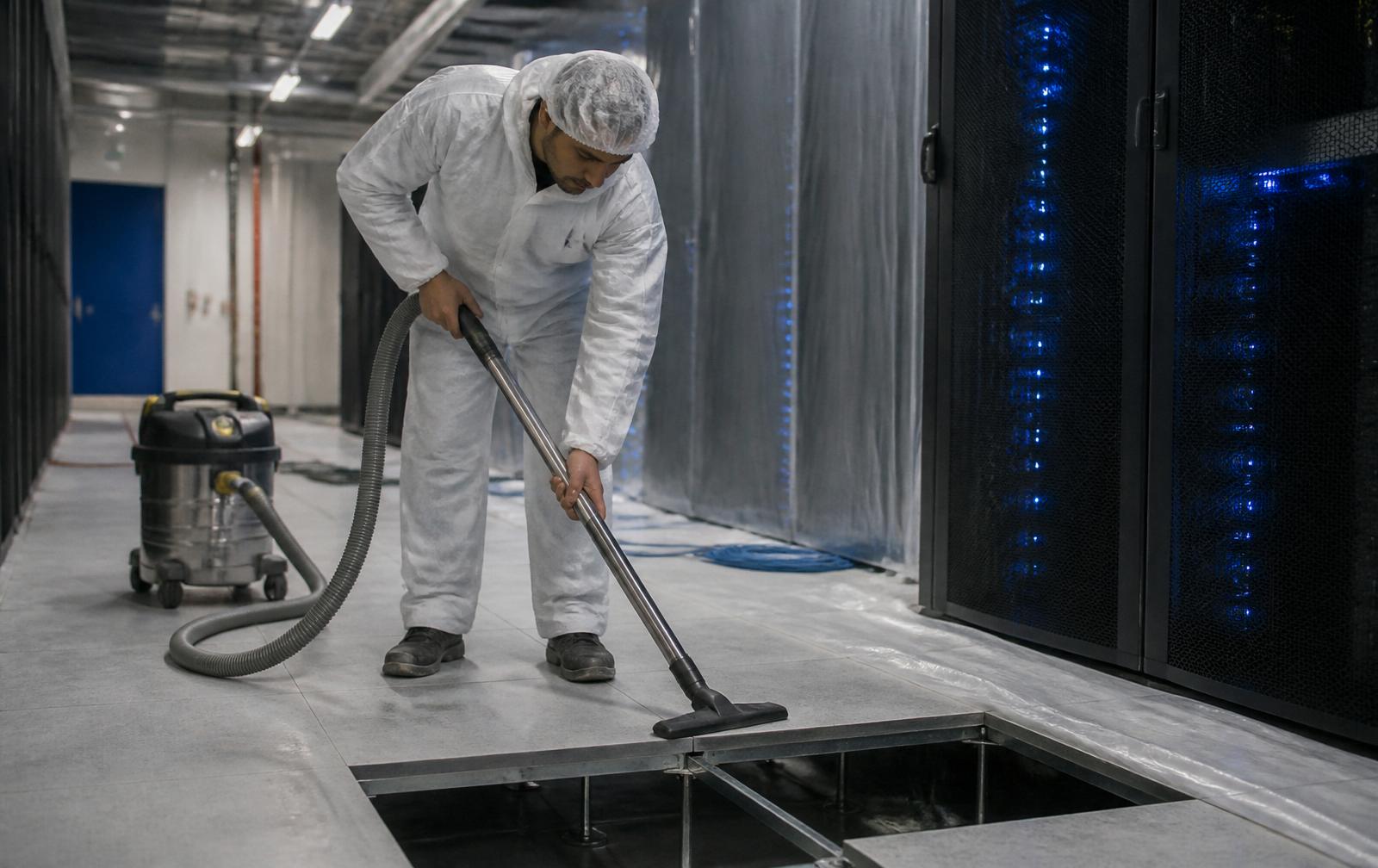

Dust is often underestimated because it accumulates slowly. In a conventional commercial space, dust may be treated as an appearance issue. In a data center, particulate contamination can become an operating issue. It can affect airflow pathways, equipment-adjacent areas, raised floor systems, vents, filters, cable trays, containment zones, and the general cleanliness profile of the environment.
The operational stakes are rising. AI and high-density compute are increasing power loads, thermal intensity, and airflow sensitivity. Global data center electricity demand is projected to grow materially by 2030, and cooling remains a meaningful component of overall facility energy consumption. As environments become denser, facility teams have less tolerance for avoidable inefficiency.
Dust does not need to cause an immediate outage to matter. It can create a slow accumulation of operational drag. Particulate buildup can increase maintenance burden, interfere with airflow confidence, complicate audits, reduce cleanliness assurance, and point to weaknesses in access control, construction containment, filtration, or service cadence. The cost is often not visible as a single event. It appears as recurring work, lower confidence, more exceptions, and increased management effort.
The standards context reinforces the point. ISO 14644-1 provides a framework for classifying air cleanliness by airborne particle concentration. IBM contamination guidance states that data centers must meet ISO 14644-1 Class 8 cleanliness for particulate contamination and warns that airborne particulates and reactive gases can pose risk to hardware, especially when combined with humidity or temperature. ASHRAE guidance similarly highlights the importance of monitoring and controlling particulate and gaseous contamination in datacom environments.
The practical implication is not that every data center should be managed like a semiconductor cleanroom. The point is that cleanliness should be managed as part of the broader environmental control program. Visual inspection alone is not enough. A data hall can appear orderly while underfloor areas, staging zones, airflow pathways, or equipment-adjacent spaces accumulate contamination that is not obvious from the main aisle.
This creates a management challenge. Facility leaders need visibility into what was cleaned, where contamination was observed, whether issues are recurring, and which areas require follow-up. Without that structure, the organization relies too heavily on informal updates and subjective vendor assurance.
Documentation and KPI tracking improve the model. Service records, zone-level observations, recurring issue logs, readiness notes, and post-service reporting create an evidence base that operators can use to manage cleanliness over time. The purpose is not to overcomplicate cleaning. The purpose is to make service quality visible.
This is particularly important in markets with high utilization and limited available capacity. When facilities are full, expansion timelines are long, and customer expectations are high, operators need every controllable process to be disciplined. Cleaning and contamination control will not solve every operational challenge, but weak controls create unnecessary ambiguity in an environment that already has enough complexity.
Capitol Core's model addresses both dimensions of the issue: the physical contaminant and the visibility gap. Specialized cleaning removes particulate from defined areas, while structured reporting helps operators understand what was completed, when it occurred, where work was performed, and what trends may need attention.
Dust control is ultimately about more than appearance. In a critical environment, it is part of maintaining airflow integrity, equipment confidence, service quality, and operational readiness.