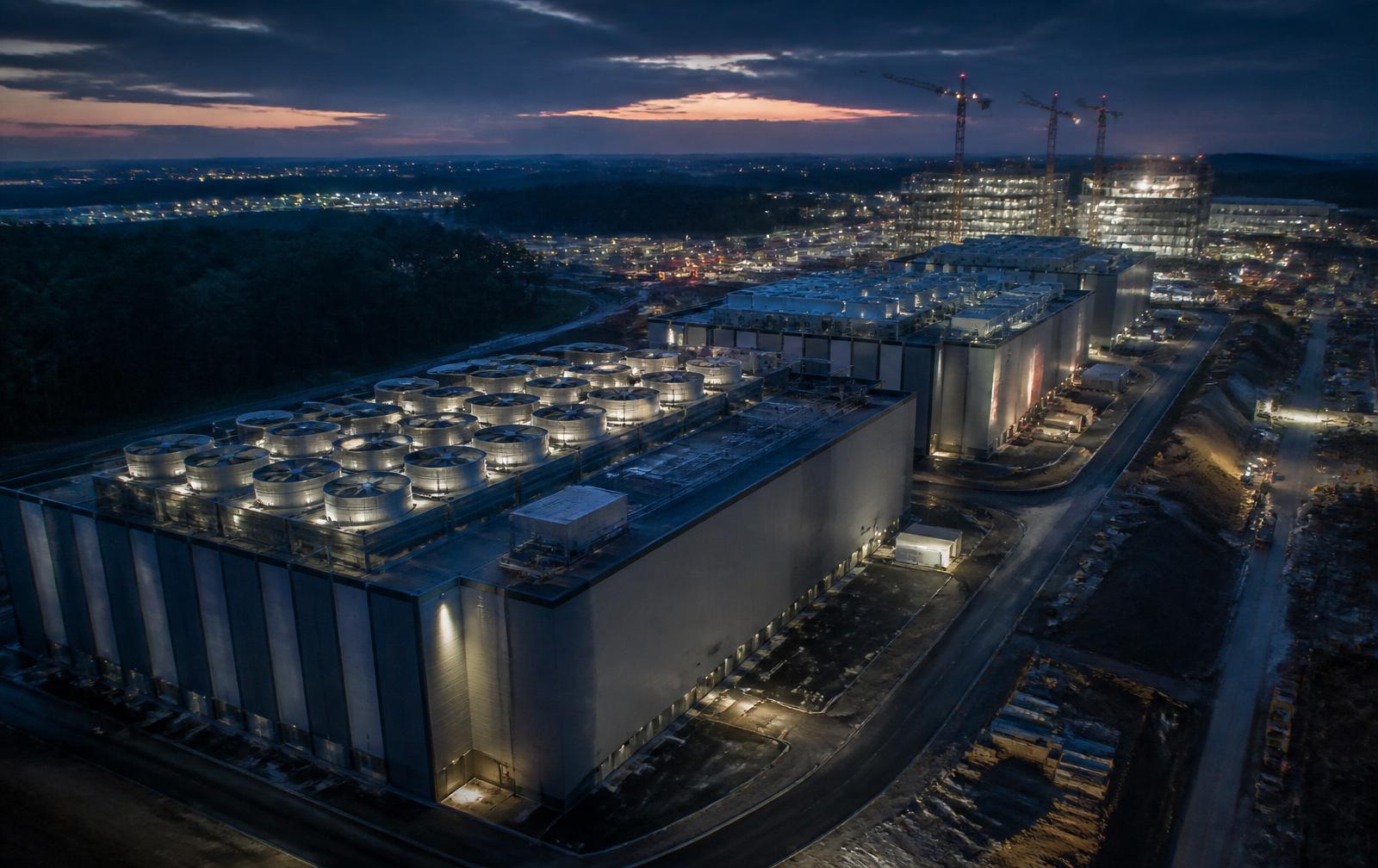
Northern Virginia has become one of the most important infrastructure markets in the world. The region's data centers support cloud computing, artificial intelligence, cybersecurity, streaming, enterprise software, financial platforms, government operations, and everyday digital services. What was once a regional technology cluster has become a global digital infrastructure hub.
The numbers are significant. The Northern Virginia Technology Council reported that Virginia data centers generated nearly $40 billion in total economic activity in 2025, supported more than 112,000 jobs, and contributed over $1.5 billion in annual state tax revenue. Loudoun County alone reports 53.3 million square feet of data centers currently in operation or under development.
That growth creates opportunity, but it also creates operational complexity. More data centers mean more construction activity, more contractors, more tenant improvements, more commissioning work, more equipment movement, more customer requirements, and more pressure on facility managers to maintain consistent standards.
For operators across Ashburn, Sterling, Leesburg, Chantilly, Manassas, Gainesville, Reston, Herndon, Fairfax County, Prince William County, Loudoun County, and the broader Northern Virginia region, facility services can no longer be treated as an afterthought. Data center cleaning, critical environment cleaning, contamination control, post-construction cleaning, raised floor maintenance, and audit-ready reporting are now part of how modern facilities protect operating environments.
Northern Virginia Is Operating at Global Scale
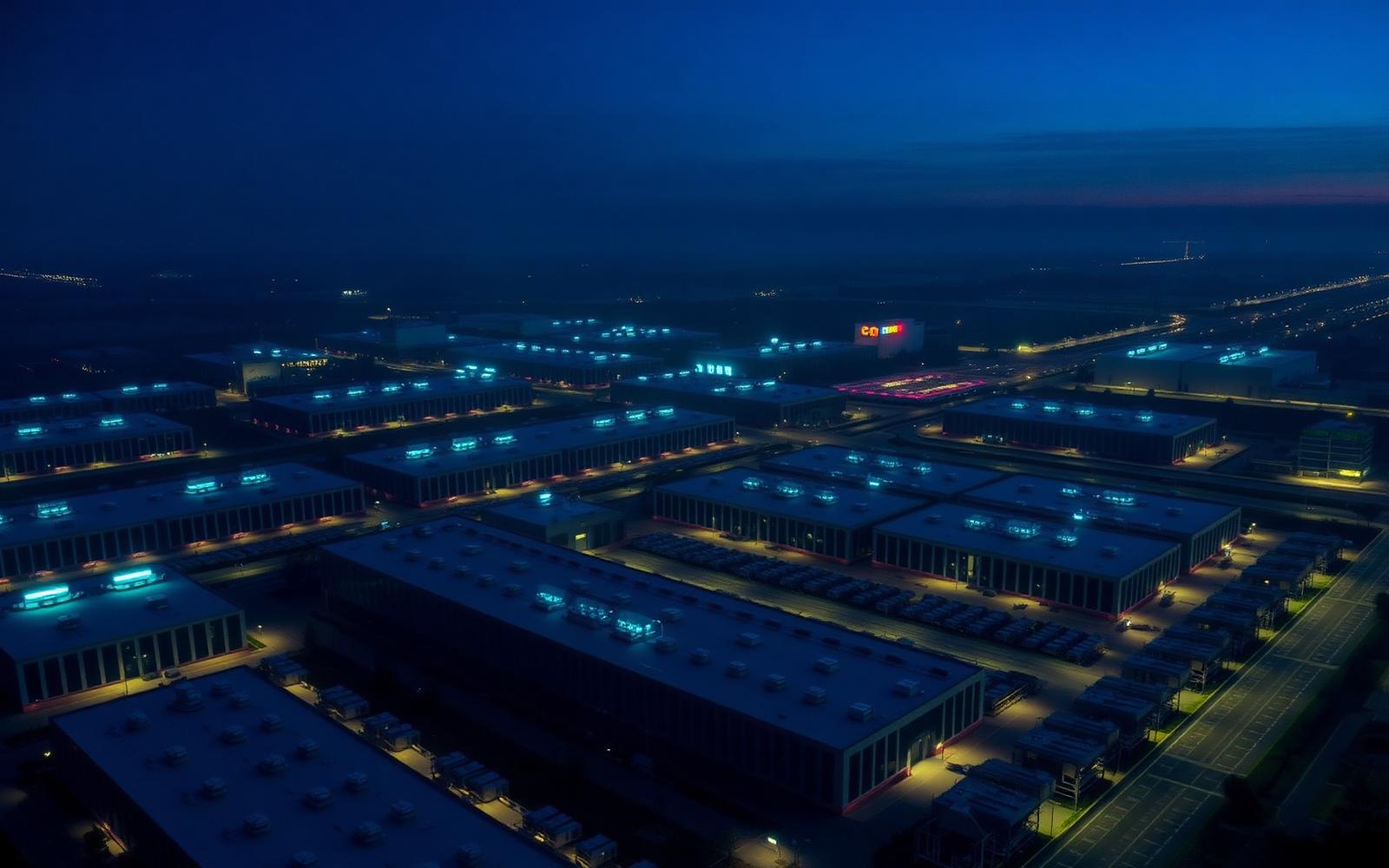
Northern Virginia is often described as the world's largest data center market. Virginia's Joint Legislative Audit and Review Commission states that Northern Virginia represents approximately 13% of all reported data center operational capacity globally and 25% of capacity in the Americas. The Northern Virginia Regional Commission states that the region's 250-plus data centers handle roughly 70% of global internet traffic.
Those figures matter because they show that Northern Virginia is not just a local real estate story. It is global infrastructure. Facilities in this region support workloads that affect companies, institutions, and consumers far beyond Virginia.
That means facility operations must meet a different standard. When a building supports mission-critical workloads, every vendor entering the facility becomes part of the risk environment. Cleaning providers, maintenance contractors, security vendors, electrical contractors, cooling specialists, equipment suppliers, and construction teams all influence the condition and reliability of the site.
For cleaning providers, this creates a higher bar. The question is not simply, "Can you clean the building?" The better question is, "Can you operate inside a critical environment without creating risk, disruption, or documentation gaps?"
Northern Virginia's Growth Is Raising the Facility Services Standard
Northern Virginia's data center market is growing at a pace that few infrastructure markets can match. CBRE reported that Northern Virginia reached 4,039.6 MW of total data center inventory at year-end 2025, up 37% from the prior year, and recorded 1,102 MW of net absorption, a 144% increase from 2024.
This growth changes the operating environment for facility managers. More capacity means more construction, more commissioning, more equipment deliveries, more service vendors, more customer requirements, and more pressure to maintain consistent facility standards.
JLL reported that Northern Virginia had approximately 5.6 GW of data center capacity in mid-2025 and remained the largest data center market in North America. JLL also reported that North American colocation vacancy fell to 2.3% in mid-2025, with the construction pipeline 73% preleased, underscoring the intensity of demand and the importance of operating existing facilities efficiently.
For cleaning and facility services, this means a higher standard. Operators cannot afford inconsistent service quality, undocumented work, untrained crews, missed service windows, reactive cleaning models, or vendors that do not understand access-controlled environments.
A modern data center cleaning partner should be able to support:
- Recurring data hall cleaning
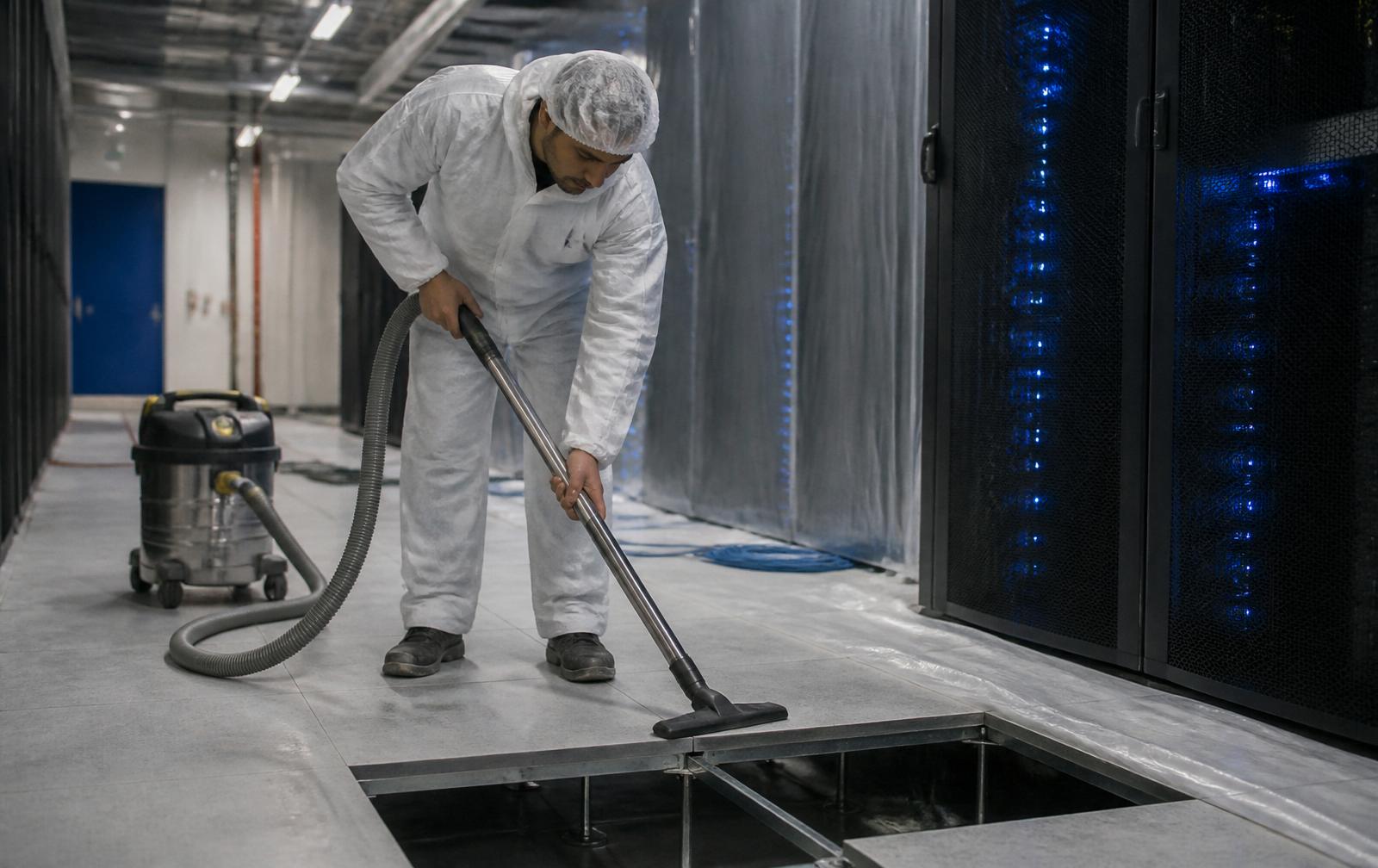
- Raised floor cleaning
- Subfloor cleaning
- Server room cleaning
- Post-construction data center cleaning
- Loading dock and transition-zone cleaning
- Customer tour preparation
- Critical environment contamination control
- Facility inspection support
- KPI-based service reporting
In this environment, cleaning becomes part of operational discipline. The right partner can help facility managers reduce contamination transfer, manage construction-related dust, protect sensitive spaces, and maintain a cleaner operating environment without adding unnecessary management burden.
Growth Increases Construction-Related Contamination Risk
One of the most important facility implications of Northern Virginia's data center growth is construction activity. Loudoun County has stated that there has not been a single day without data center construction in Loudoun in more than 14 years.
Construction creates dust, debris, packaging waste, concrete particles, drywall dust, pallet residue, metal shavings, cable scraps, ceiling tile particles, and material movement. Even when construction activity is not happening inside a live data hall, particulates can migrate through loading docks, corridors, staging areas, mechanical rooms, overhead spaces, and transition zones.
Common contamination sources include:
- Drywall dust
- Concrete dust
- Packaging fibers
- Pallet debris
- Metal shavings
- Cable scraps
- Ceiling tile particles
- Foot traffic from contractors
- Exterior dirt near high-activity entrances
- Equipment delivery residue
In a conventional building, these issues may be treated as routine cleanup. In a data center, they can affect airflow, inspection readiness, customer perception, and operational confidence.
That is why post-construction data center cleaning in Northern Virginia, critical environment cleaning in Ashburn, and data center contamination control in Loudoun County should be integrated into the facility operating plan. Cleaning should not simply happen after problems become visible. It should be planned around the facility's risk profile.
Power Growth and Cooling Pressure Increase the Importance of Clean Environments
Data center growth is also increasing energy demand across Virginia. The U.S. Energy Information Administration reported that commercial electricity sales in Virginia increased by nearly 30 million megawatthours between 2019 and 2025, with growth largely driven by data centers, electric vehicle adoption, and building electrification.
The Northern Virginia Regional Commission has also noted that power demand in Virginia is expected to grow by about 85% over the next 15 years, and that the data center industry in Virginia may require 11,000 megawatts by 2035.
These figures are often discussed in terms of utilities, transmission, energy policy, and development constraints. But they also matter for facility operations and cleaning.
Data centers are thermal environments. They rely on carefully managed airflow, cooling infrastructure, filter performance, and clean pathways for heat removal. Dust and debris do not replace engineering concerns, but they can contribute to avoidable operating friction. ASHRAE's data center contamination guidance identifies mechanical effects such as heat sink fouling and optical interference as potential consequences of airborne contamination in data center environments.
Professional cleaning supports the operating environment by helping maintain:
- Cleaner airflow pathways
- Cleaner raised floor and subfloor spaces
- Cleaner loading docks and staging zones
- Cleaner equipment-adjacent areas
- Cleaner customer-facing corridors
- Better readiness for inspection and tours
- Reduced contamination transfer from construction or deliveries
As data centers become more power-dense and cooling-sensitive, cleaning practices should become more disciplined, not less.
AI Infrastructure Is Raising Operational Expectations
Artificial intelligence is accelerating demand for digital infrastructure. The Northern Virginia Regional Commission notes that accelerated applications of AI are projected to further multiply power demands over the next decade. Aurora Energy Research reported that PJM expects 11 GW of new data centers by 2030 in Northern Virginia alone, representing more than 40% of Virginia's current peak demand.
AI workloads are often associated with higher-density infrastructure, more complex cooling strategies, and more demanding operating requirements. While not every facility will operate the same way, the overall standard is moving upward.
This has implications for data center cleaning companies and facility services providers. Operators will increasingly favor partners that can offer:
- Specialized critical environment cleaning
- Trained crews
- Site-specific procedures
- Access discipline
- Structured service documentation
- Consistent quality assurance
- Flexible service models
- KPI-driven reporting
- Proactive communication
In Northern Virginia, the market is too sophisticated for generic janitorial positioning. Data center operators need vendors who understand the difference between cleaning a commercial building and supporting a critical infrastructure environment.
Documentation Will Become More Important
As the Northern Virginia market matures, facility managers will need stronger documentation from service providers. Informal updates are not enough when facilities are being toured, audited, inspected, commissioned, or evaluated by enterprise customers.
A strong data center cleaning program should provide:
- Service completion logs
- Area-by-area cleaning records
- Exception reporting
- Before-and-after photos where appropriate
- Issue escalation
- Quality assurance notes
- Recurring trend tracking
- KPI reporting
- Site-specific cleaning checklists
This is especially important because many Northern Virginia data centers support sophisticated users, including cloud providers, hyperscale operators, enterprise customers, government-related workloads, financial platforms, and healthcare systems.
A partner-facing dashboard can be a major differentiator because it gives operators structured visibility into service performance. Instead of managing cleaning through emails, texts, or incomplete sign-offs, facility managers can see what was completed, what needs follow-up, and where recurring issues are emerging.
Cleaning Should Be Built Around Facility Zones
A one-size-fits-all cleaning program does not work well in data centers. Different areas carry different levels of risk.
A Northern Virginia data center cleaning program should distinguish between:
Critical zones
These may include data halls, raised floor areas, server rooms, network rooms, meet-me rooms, electrical spaces, and mechanical rooms. Cleaning should be controlled, coordinated, and performed by trained personnel.
Controlled support zones
These may include staging areas, secure corridors, storage areas, shipping and receiving areas, and technical workrooms. These areas are often sources of contamination transfer.
General facility zones
These may include offices, lobbies, break rooms, conference rooms, restrooms, and customer-facing spaces. These areas still matter because they influence customer perception and employee experience.
Exterior and transition zones
These may include loading docks, entrances, vestibules, sidewalks, parking-adjacent access points, and delivery corridors. These zones matter because contaminants often enter the facility from the outside.
By organizing cleaning around facility zones, operators can better match cleaning frequency, documentation, equipment, staffing, and quality assurance to actual risk.
What This Means for Northern Virginia Operators
Data center growth in Northern Virginia is increasing the need for operational discipline. Facilities are larger, more complex, more visible, more capacity-constrained, and more central to the economy.
Operators should ask whether their cleaning program is keeping pace with the market:
- 1Is cleaning documented well enough for an audit, inspection, or customer review?
- 2Are cleaning crews trained for critical environment expectations?
- 3Are raised floor and subfloor areas cleaned on a recurring schedule?
- 4Are construction-related contaminants being controlled?
- 5Are cleaning standards consistent across multiple sites?
- 6Does the provider communicate issues proactively?
- 7Can the facility manager see service quality over time?
- 8Is the cleaning provider reducing workload or creating more follow-up?
- 9Are data halls, loading docks, staging areas, and customer-facing spaces all included in the service model?
- 10Is there a KPI-based reporting process?
If the answer to any of these questions is unclear, the cleaning program may need to be modernized.
The Bottom Line
Northern Virginia's data center growth is reshaping facility operations. The region's massive scale, ongoing construction, energy demand, AI-driven expansion, and global connectivity have raised the standard for every vendor operating inside critical environments.
Cleaning is no longer just a janitorial function. In a market like Ashburn, Loudoun County, Prince William County, Fairfax County, and the broader Northern Virginia data center corridor, cleaning is part of contamination control, operational readiness, customer confidence, uptime culture, and cost management.
Capitol Core Facility Services supports data center and critical environment operators across Northern Virginia with specialized cleaning, contamination control, and audit-ready facility service documentation. Whether your site needs recurring data hall cleaning, raised floor maintenance, post-construction cleaning, or a more accountable facility services partner, Capitol Core is built for the operational standards of Data Center Alley. Request a quote to discuss a tailored cleaning program for your facility.