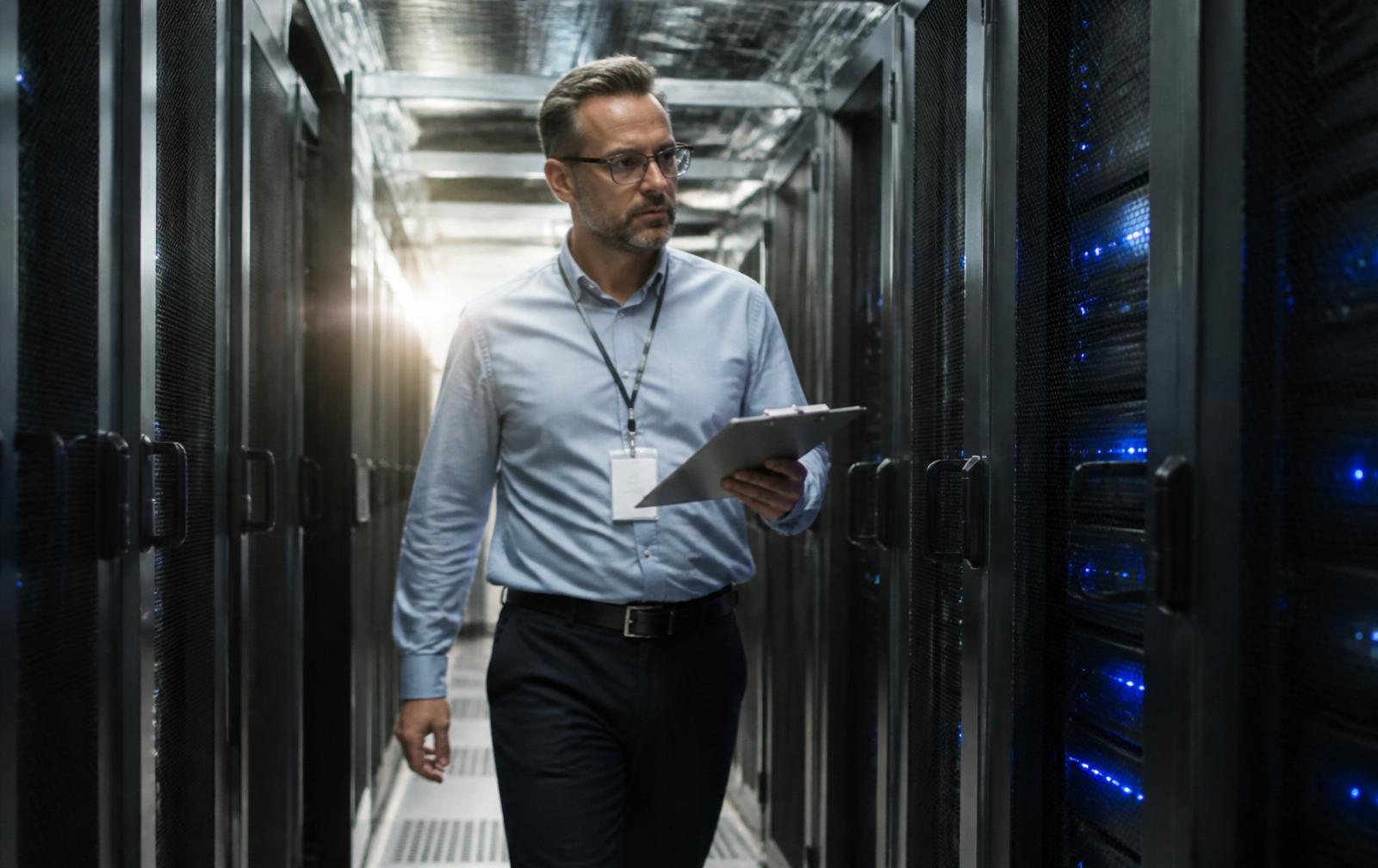
Selecting a data center cleaning partner is not the same as selecting a general commercial cleaning provider. Data centers are active, high-sensitivity environments where service execution can affect airflow, equipment confidence, uptime culture, audit readiness, and customer trust. The right provider should understand the operating context, not simply the cleaning task.
The broader market context makes vendor evaluation more important. Data center vacancy in primary North American markets has reached historically low levels, and Northern Virginia continues to represent one of the most important digital infrastructure markets globally. In high-demand environments, operators cannot afford avoidable service ambiguity. Providers must be evaluated based on their ability to support operational discipline, not merely provide labor.
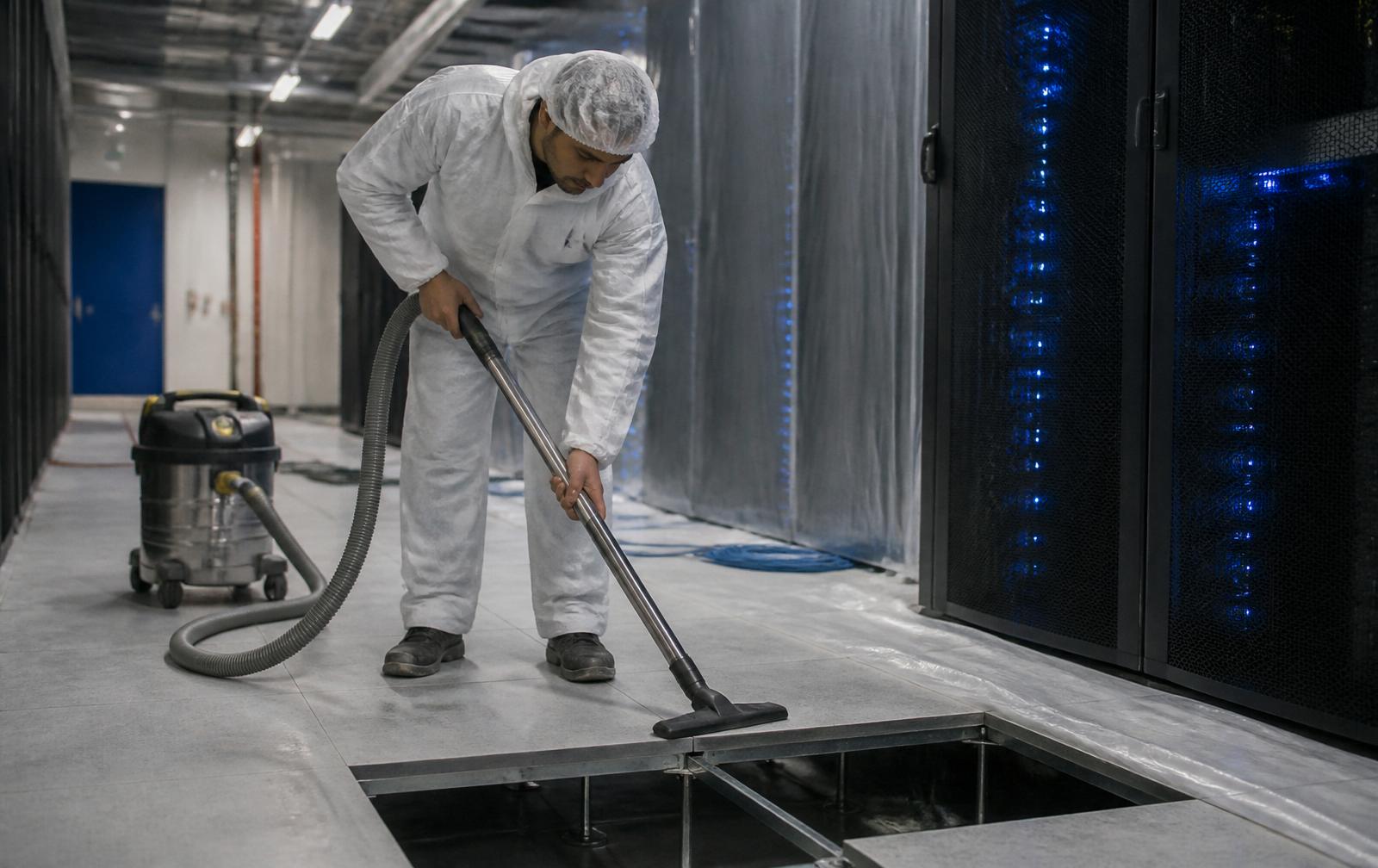
The first criterion is critical environment experience. A qualified partner should understand data halls, enterprise server rooms, colocation environments, raised floor systems, restricted access, maintenance windows, hot aisle and cold aisle configurations, and coordination requirements within live infrastructure. Providers built primarily for office cleaning may not have the procedures, equipment, training, or documentation maturity required for these environments.
The second criterion is method and equipment suitability. Operators should look for controlled procedures, appropriate filtration equipment, ESD-aware practices, site-specific planning, and alignment with facility requirements. The provider should be able to explain how work will be performed without introducing moisture, static, dust migration, access disruption, or equipment-adjacent risk. If the provider cannot describe the method clearly, the facility team may inherit avoidable uncertainty.
The third criterion is documentation. Operators should ask what reporting is provided after each visit. A strong partner should be able to document areas completed, service timing, observations, exceptions, issue notes, and follow-up items. Documentation matters because it supports audit readiness, vendor governance, operational continuity, and internal communication.
The fourth criterion is service visibility. In a critical environment, facility teams should not rely solely on verbal confirmation or informal vendor updates. KPI tracking can provide visibility into service completion, zone coverage, recurring observations, documentation status, readiness indicators, inspection outcomes, and service cadence. The objective is not to create reporting for its own sake. The objective is to provide facility managers with a clearer operating picture.
The fifth criterion is security and coordination. A data center cleaning partner must be able to operate within badge procedures, escort requirements, restricted areas, off-hour work windows, maintenance windows, site safety practices, and communication protocols. In many facilities, how work is coordinated is as important as the cleaning itself.
The sixth criterion is scalability across engagement types. A one-time post-construction clean, a pre-audit readiness effort, a raised-floor program, and an ongoing maintenance contract all require different execution rhythms. The strongest partners can support multiple models while maintaining consistent procedures and documentation.
Finally, operators should assess communication maturity. The best providers make work easier for facility teams. They clarify scope, identify constraints, raise issues early, document outcomes, and reduce ambiguity. That is the difference between a vendor relationship and an operating partnership.
Capitol Core's model is built around these expectations. The company combines critical environment execution with documentation, KPI tracking, performance reporting, and partner-aligned workflows. This allows facility operators to evaluate service delivery through measurable outcomes rather than informal confirmation.
In mission-critical environments, price should never be the only evaluation lens. The better question is whether the provider can support operational continuity, communicate clearly, and document work in a way that supports long-term facility governance.